
Eggs Are for Everyone: Celebrating National Egg Month
May is National Egg Month, a time to recognize a beloved food that has been a staple in American kitchens for generations. While egg production has changed in many ways over the years, one thing remains constant: Eggs are for everyone.
Whether as a breakfast centerpiece or an essential ingredient for family recipes, eggs are a leading source of high-quality protein. In fact, more than 4 in 5 Americans keep eggs in their refrigerator and purchase them regularly, according to the American Egg Board, with 87% of Americans enjoying eggs at least once a week.
While eggs haven’t changed, the choices and labels in the egg case have evolved over the years. How people think about their food, what it represents, and where it comes from is informing consumer decisions at the grocery store. That shift has helped shape Versova's growth, ensuring we continue to meet customers' demands while staying rooted in our values.
The egg choices for today’s consumers
Today’s egg options reflect that each consumer has unique egg purchasing habits. Choices in the egg case represent different production methods designed to meet a range of individual preferences.
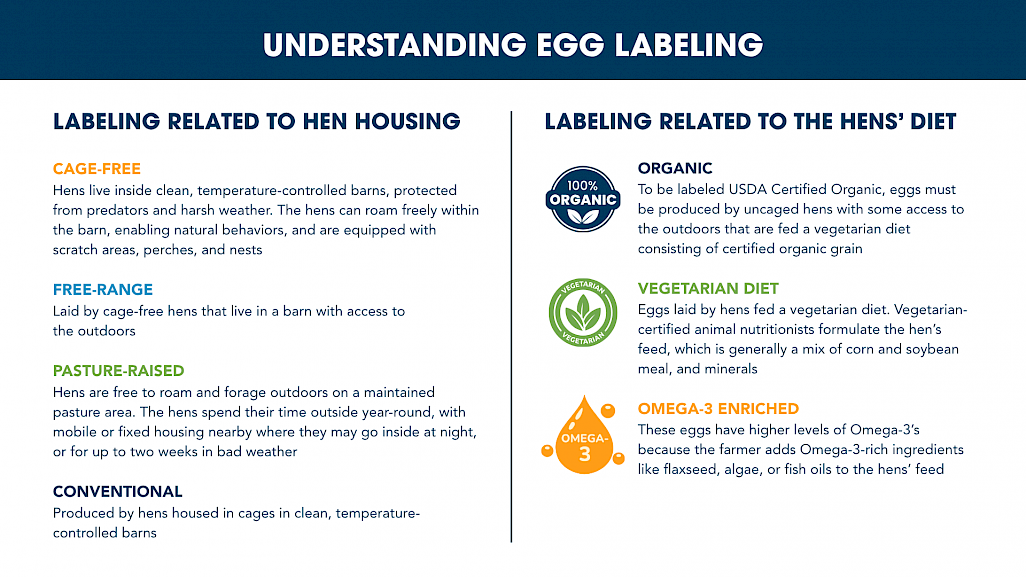
Most egg label claims are related to how the hens that laid the eggs were raised. Labels like cage-free and free-range refer to the hens’ housing environment on the farm, while organic or vegetarian-fed refer to the hens’ diet.
What are the types of hen housing labels consumers may find in the grocery store?
-
Conventional: Produced by hens housed in cages in clean, temperature-controlled barns. This setup allows for efficient hen care, sanitation, and egg collection. Conventional eggs typically do not have any additional labeling
-
Cage-free: Hens live inside clean, temperature-controlled barns, protected from predators and harsh weather. The hens can roam freely within the barn, enabling natural behaviors, and are equipped with scratch areas, perches, and nests
-
Free-range: Laid by cage-free hens that live in a barn with access to the outdoors
-
Pasture-raised: Hens are free to roam and forage outdoors on a maintained pasture area. The hens spend their time outside year-round, with mobile or fixed housing nearby where they may go inside at night, or for up to two weeks in bad weather
What are the types of nutrient-enhanced diets hens receive?
-
Organic: Eggs must meet specific qualifications to be labeled USDA Certified Organic. Certified organic eggs are produced by uncaged hens with some access to the outdoors that are fed a vegetarian diet consisting of certified organic grain
-
Vegetarian diet: Eggs laid by hens fed a vegetarian diet. Vegetarian-certified animal nutritionists formulate the hens’ feed, which is generally a mix of corn and soybean meal, and minerals.
-
Omega-3 enriched: These eggs have higher levels of Omega-3’s because the farmer adds Omega-3-rich ingredients like flaxseed, algae, or fish oils to the hens’ feed
Additionally, you may find third-party egg label certifications that indicate specific standards of welfare practices or regulatory guidelines were maintained in egg production. For example, egg label certifications such as United Egg Producers (UEP) Certified and USDA Certified Organic are commonly found on an egg carton.
Prioritizing hen care
Egg farmers care about their hens and know that healthy, well-cared-for hens produce high-quality eggs. Regardless of production method or housing style, egg farmers follow mandatory and voluntary hen welfare programs, like UEP Certified.
Dr. Larry Sadler, senior vice president of animal welfare at United Egg Producers, oversees the industry-leading certification program that provides science-based guidelines for hen health and well-being.
“UEP Certified standards are grounded in decades of scientific research and are designed to support the health and well-being of hens across all production systems,” said Dr. Sadler. “Regardless of how hens are housed, the focus remains on providing proper care, nutrition, and a well-managed environment that supports their overall health.”
Today, more than 90 percent of eggs produced in the US come from farms that voluntarily participate in UEP Certified, choosing to open their farms to independent auditors. UEP Certified offers guidelines for both conventional and cage-free production.
The rise of cage-free egg production
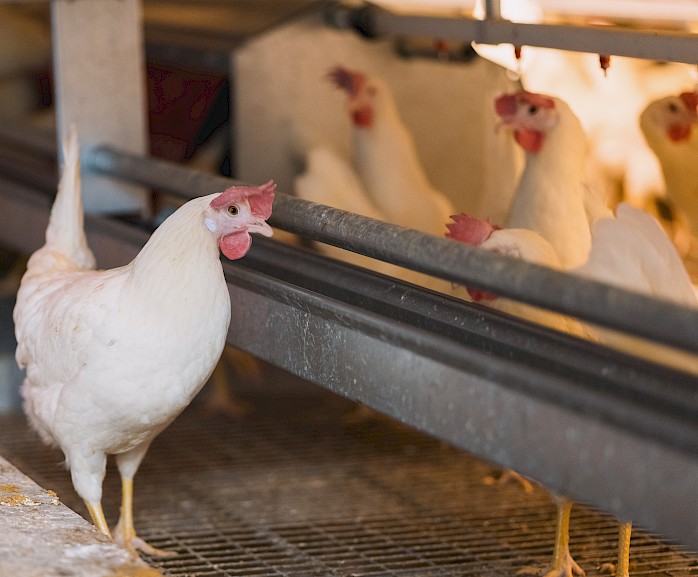
One of the most significant shifts in egg production has been the rapid growth of cage-free hen housing.
While consumer awareness of how hens are raised has certainly increased over time, the transition to cage-free has been driven primarily by state legislation and customer commitments, rather than individual purchasing decisions alone. More than 10 states have passed laws requiring cage-free production, with many taking effect in 2025 and 2026.
At the same time, retailers and food service companies have made their own cage-free pledges, creating a need for suppliers to adapt quickly and at scale to meet their specifications.
For egg producers, this shift has required thoughtful, long-term investment, as well as partnership with their customers. At Versova, that means working to understand the evolving needs of each customer and helping them navigate the changing marketplace. It also presents the opportunity to help educate customers about the differences in production systems and what each label means for the end consumers.
Meeting demand in a changing landscape
At Versova, our approach to cage-free transition has been purposeful and forward-looking. We have evolved in step with the markets while maintaining consistency in hen care and egg quality.
“As the egg business shifted, we were intentional about evolving with it. Our flock managers care for hens in a variety of production settings, offering egg choices with quality and consistency,” said Ross Dean, senior vice president of key accounts.
Versova has expanded its cage-free production footprint to meet regulatory requirements and support customers as they fulfill cage-free commitments. This shift isn’t about replacing one system with another; it’s about offering a range of products to customers and ensuring the sustainability of our business.
“Versova’s role is to ensure our customers, including grocery stores and food retailers, have the right mix of products for their supply needs, and that means there’s no one-size-fits-all solution,” added Dean.
Protein with purpose: Feeding the future, one egg at a time
Eggs sit at the intersection of today’s most important food priorities: Real food, high-quality protein, affordability, and versatility.
Versova’s commitment to protein with purpose means delivering nutrition people can trust while providing choices they expect.
Unless the carton indicates the egg is nutritionally enhanced, with Omega-3, for example, all eggs offer the same nutritional profile, regardless of the production system or shell color. Every egg delivers high-quality, complete protein and essential nutrients, making it one of the most nutrient-dense, accessible foods available.
Eggs are a nutritious, whole food that continues to be recommended as part of a healthy diet. The most recent dietary guidelines for Americans prioritize high-quality protein, including eggs, at every meal. Eggs are known for their unique set of nutrients that support health across a person’s lifespan, and pair well with other nutritious foods, making it easier to eat healthy.
Egg-splore what eggs can do for you
It’s clear that eggs continue to play an essential role in diets across the country, not because of how they are labeled, but because of what they deliver. The future of eggs isn’t defined by a single production method, but rather the ability to offer choice, ensure consistency, and maintain trust. As we celebrate National Egg Month, we encourage you to egg-splore the world of opportunities with eggs in your meals.
At Versova, we’re proud to be part of that evolution, ensuring that no matter how preferences change, one thing stays the same: Eggs are for everyone.
Source: https://www.versova.com/blog/eggs-are-for-everyone-celebrating-national-egg-month/