
Locally sourcing grain: Good for hens and the environment
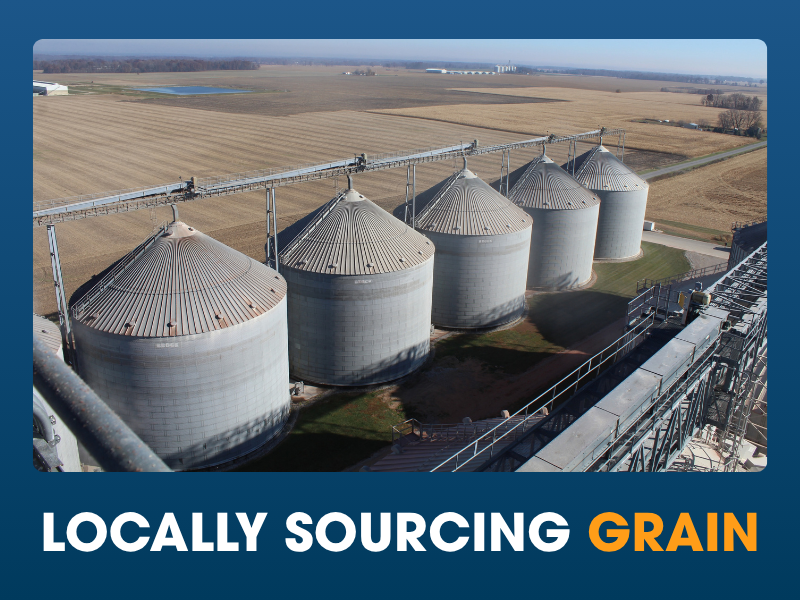
Quality eggs start with healthy hens. If we dig deeper, we find that healthy hens rely on nutritious feed, and that feed starts with high-quality grain.
For Versova, grain is more than a feed ingredient. It is the foundation for hen nutrition across every life stage. That foundation depends on local farmers delivering corn and soybeans, feed mill teams turning grain into quality feed, and nutrition experts formulating balanced diets. Together, their work turns locally sourced grain into high-quality eggs.
Hen nutrition starts with dependable ingredients
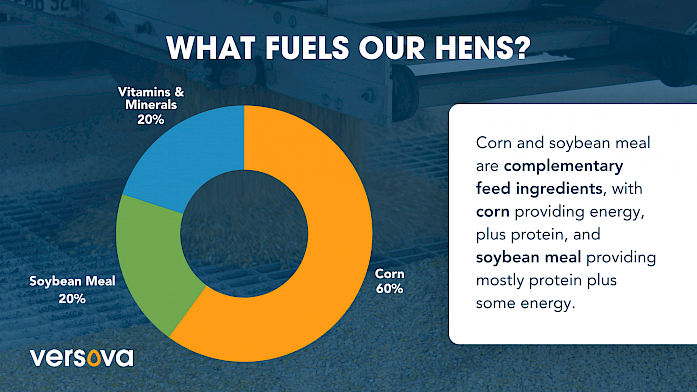
A laying hen’s diet is composed mostly of corn and soybeans, which provide important sources of energy, protein, and minerals. The feed for Versova hens is made with approximately 60% corn, 20% soybean meal, and 20% vitamins and minerals. Corn and soybean meal are complementary feed ingredients, with corn providing energy, plus protein, and soybean meal providing mostly protein plus some energy.
Hens need consistent, balanced nutrition to support their health, productivity, and the quality of the eggs they lay. Grain plays a central role, providing an important base for feed formulas, which are customized to meet the needs of each flock.
For Versova’s nutrition team, ingredient quality and consistency matter because feed decisions are connected to animal care and operational performance. When grain is sourced thoughtfully and milled consistently, the flocks benefit from the right balance of nutrients.
“Our nutrition team closely monitors hen health and develops the specific feeding program for each stage of the hens’ lives,” says Stacey Roberts, Ph. D., senior director of nutrition. “We rely on our feed mill and procurement teams to source high-quality grain for optimal nutrients.”
Importance of locally sourced grain
Versova has a dedicated team responsible for sourcing grain from farmers near the company’s 12 feed mills across the country.
For Andy Bregel, business unit leader, overseeing the Trillium Farms feed mills in Ohio, sourcing grain locally is about more than geographic proximity. It is about building dependable relationships with farmers to create a reliable supply of grain ingredients for each farm.
Most of the corn and soybeans used in Versova’s feed come from farm fields within a 50-mile radius of the feed mills, supporting our farmer neighbors and boosting the local economy.
“It’s great to provide a market and support the local community, which in turn supports our operations,” says Bregel.
Long-standing farmer partnerships are especially valuable when grain supplies tighten or needs shift. Bregel noted that strong relationships have allowed the team to work with local farms on delivery schedules that benefit both Versova and the farmer while ensuring hens receive the nutrition they need.
“When we work closely with local farmers we are able to maintain a reliable supply of feed ingredients to help support the wellbeing of our hens,” he said.
We rely on vendors and haulers to deliver high-quality ingredients needed to make feed that provides the best and highest nutritional value possible.
Because grain is a major input in egg production, changes in grain markets can influence the cost of producing eggs. Optimizing our feed formulations and incorporating a variety of feed ingredients helps manage costs during changing market conditions.
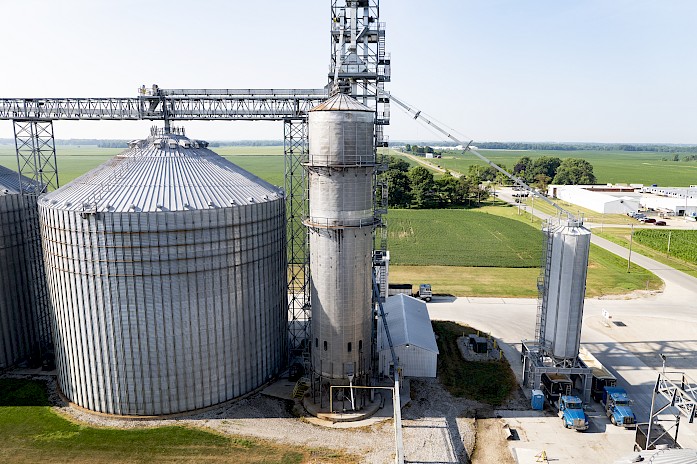
The feed mill at Trillium Farms in Johnstown, OH accepts corn and soybeans year-round.
Sourcing with sustainability in mind
Responsible grain sourcing is a key part of Versova’s broader sustainability efforts. Sourcing grain close to where it is used reduces transportation, supports nearby farm communities, and creates a more efficient supply chain.
“Our approach to sustainability is focused on finding practical ways to reduce our environmental impact while improving operational efficiencies,” says Emily Battilega, director of sustainability. “By sourcing grain closer to where it is needed and investing in more efficient feed delivery systems, we decrease environmental impact from trucking, improve efficiency, and make better use of our resources.”
At four of Versova’s farms, conveyor systems deliver the feed directly from the mill to the hen house without needing to load it onto trucks. The conveyor systems have eliminated more than 20,000 truck miles annually, while moving feed 70 tons per hour faster.
Sustainable nutrition means continuously improving how feed is formulated, sourced, and delivered to produce a high-quality product with less waste and a smaller impact on natural resources.
“Our goal is to continue identifying practical improvements that allow us to produce high-quality eggs while using natural resources thoughtfully,” says Battilega.
From grain to feed
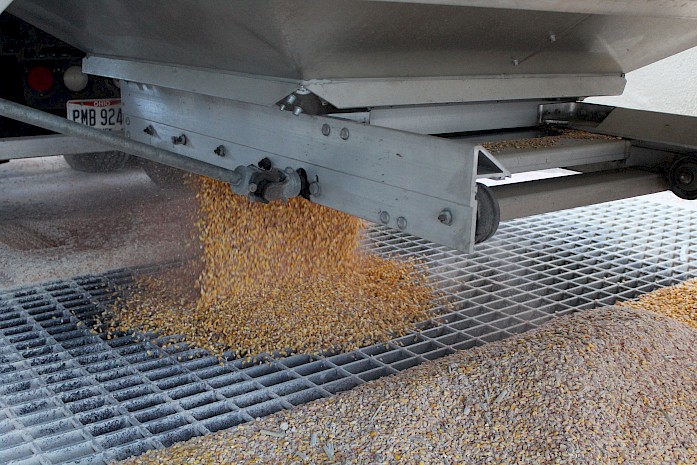
Corn is received at one of Versova’s feed mills. The yellow color of the corn the hens eat contributes to the bright yellow pigment of the egg yolks.
Once grain arrives at the feed mill, it becomes part of a carefully managed process. Employees are making key decisions at every step to ensure our flocks are well nourished. Incoming ingredients are sampled and analyzed. After precisely quantifying the nutrient levels in the ingredients, the hen nutrition team creates feed formulas that exactly meet the nutritional requirements of each flock. We like to think of our hens as elite Olympic athletes or professional sports players, says Dr. Roberts. They reach their full potential when they have the best nutrition. From sampling incoming grain to monitoring equipment and following feed-safety procedures, feed mill team members play an important role in protecting feed quality.
Employees at each feed mill location receive, handle, grind, and mix ingredients according to formulas developed in collaboration with the nutrition team. With experts at all levels, from procurement to feed operations to nutrition, the cross-functional work ensures the right feed reaches the right flock at the right time.
From the outside looking in, it might be “just chicken feed.” Yet feed mill operations at Versova are tightly managed and precisely operated. The feed mill is the kitchen for our flocks — a highly efficient kitchen designed for quality and throughput. Bins of ingredients are carefully managed, ensuring materials stay fresh. Ingredients are efficiently transported through a series of augers and weighed with calibrated scales. Precision is necessary. There are ingredients that make up 60% of the formula to ingredients that make up 0.1% of the formula. Our equipment is calibrated to auger and weigh at those extremes. Each hen consumes about 100 grams of feed, the amount you could hold in your hands.
Consistency starts long before the finished feed reaches the barn. Ingredients are sampled when they arrive at the feed mill. To ensure quality is maintained, grain storage bins are cycled and emptied routinely, and employees are trained on feed safety standards that protect the quality of every batch. These daily practices ensure the mills deliver consistent feed to support hen nutrition.
For customers and consumers, feed mill operations may be more complex than expected. Much of the work happens out of sight by underground and overhead equipment that keeps ingredients moving safely and efficiently. Yet the overall purpose is simple: Provide hens with reliable, high-quality nutritional feed while strengthening the communities where Versova operates.
Every step matters
From the field where the crops are grown to the hens that enjoy balanced nutrition every day – each step in the feed production process is important and designed to support healthy flocks.
While we make batches of feed by the truckload, our processes ensure every handful contains the nutrients hens need each day. When flocks receive consistent, nutritious feed, they have the foundation needed to stay healthy and produce high-quality eggs.
By sourcing quality ingredients, maintaining strong relationships with local farmers, and continuously improving how feed is formulated and delivered, Versova can support hen health while using resources responsibly.
Source: https://www.versova.com/blog/locally-sourcing-grain-good-for-hens-and-the-environment/